Post-Harvest Coffee Processing

Coffee Processing Equipment, Project Leadership, and Mill Intelligence

V5 Strategies supports coffee dry mills, processors, exporters, cooperatives, equipment manufacturers, millwrights, contractors, and design-build firms involved in post-harvest coffee processing.

From parchment or green coffee receiving, pre-cleaning, hulling, aspiration, density separation, size grading, optical color sorting, storage, weighing, and bagging, each stage must protect the quality and identity of the product while preparing it for the intended market.

V5 connects coffee-processing equipment sourcing, international project leadership, logistics, installation coordination, commissioning support, documentation, and V5 Pulse Mill Intelligence within one coordinated strategy.

Protect the coffee. Connect the equipment. Keep the project moving.

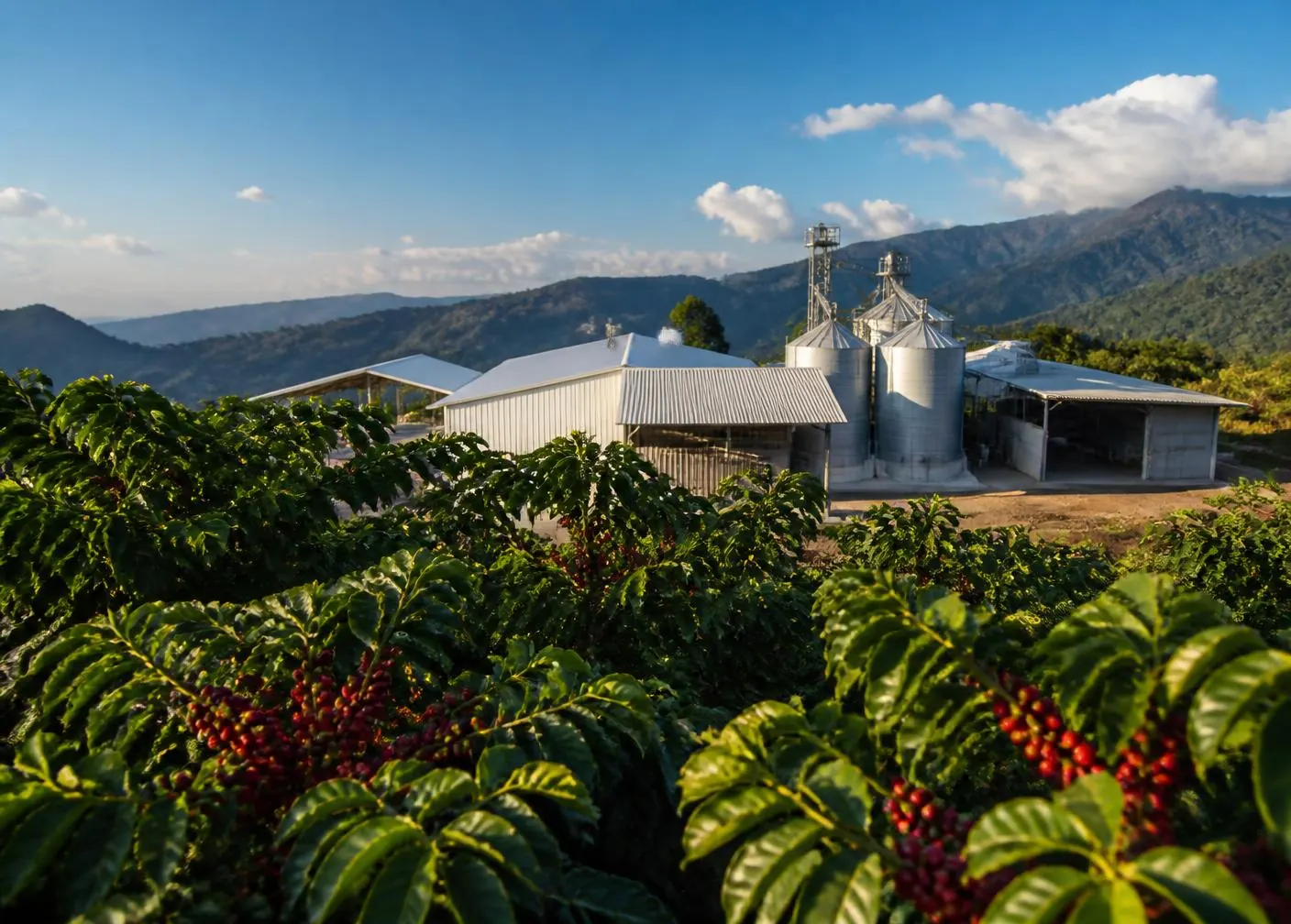
Coffee plants with ripe cherries on a mountain hillside in front of a commercial coffee dry mill with steel storage silos

Focused on Coffee Dry Milling and Export Preparation

Coffee processing can include several distinct activities between harvest and consumption. Wet processing may involve pulping, fermentation, washing, and drying. Dry milling begins after the coffee has been dried and prepares parchment or green coffee for grading, sorting, storage, packaging, sale, or export.

This V5 Strategies page focuses primarily on post-harvest dry-mill equipment and projects.

Coffee dry milling may include receiving, lot segregation, pre-cleaning, hulling, aspiration, destoning, density separation, size grading, optical sorting, final inspection, weighing, bagging, warehousing, and finished-product handling.

The exact process depends on whether the incoming material is parchment or green coffee, the product condition, variety, origin, moisture, desired grade, defect profile, market requirements, available facility, and responsible technical specialists.

This is not coffee roasting equipment. This is the machinery and project execution behind market-ready green coffee.

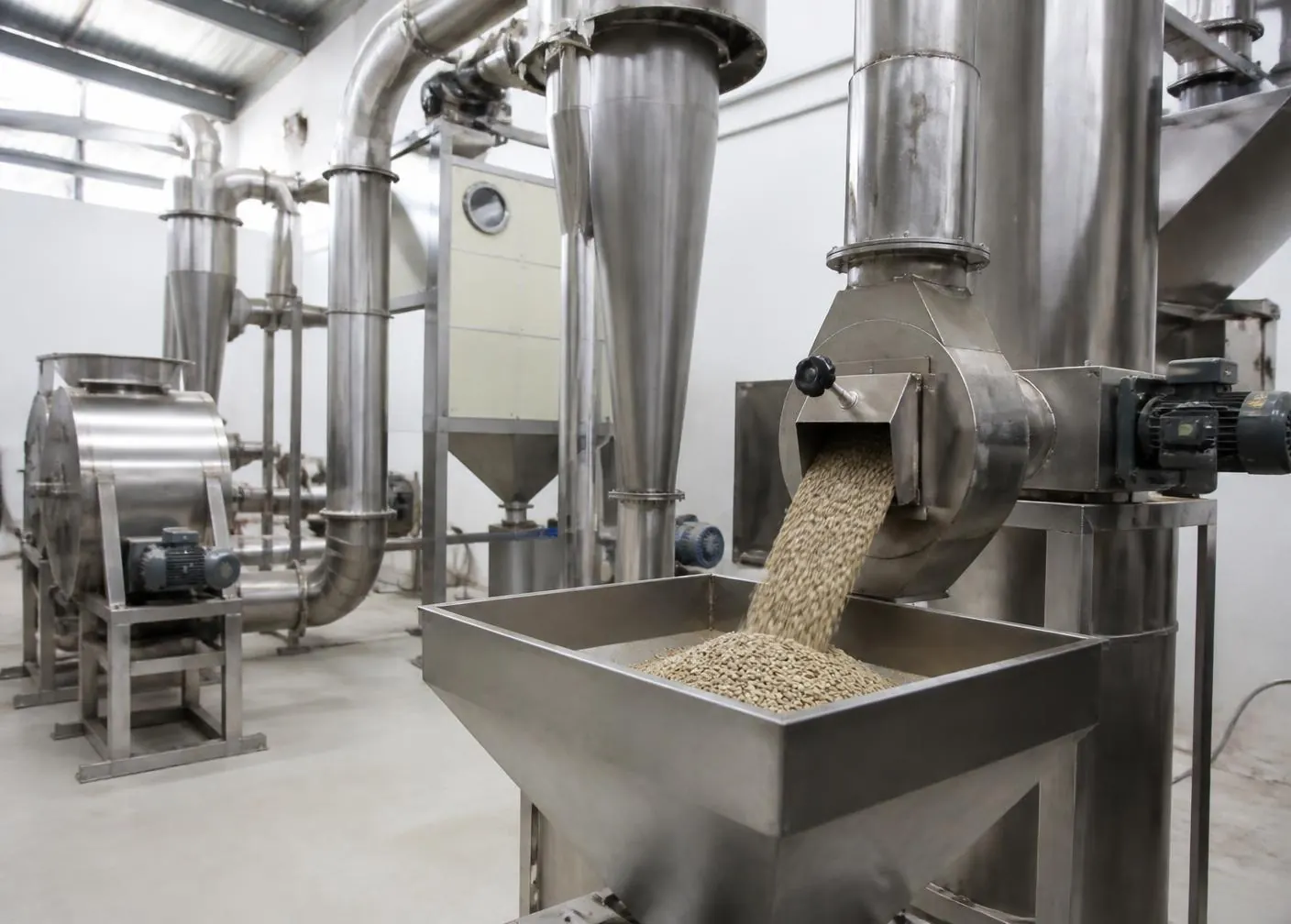
Parchment coffee hulling and aspiration equipment discharging green coffee inside a commercial dry mill

Understanding the Commercial Coffee Dry-Milling Process

A coffee dry mill must remove unwanted material and classify the product while minimizing unnecessary damage and preserving the characteristics that create its value.

The final process and equipment sequence must be developed according to the incoming coffee, desired product, facility, required capacity, customer specifications, local requirements, and responsible equipment manufacturers.

  1. 01

    Receiving, Sampling, and Storage

    Parchment or green coffee is received, identified, sampled, weighed, conveyed, and directed to appropriate storage according to the facility’s operating and lot-management procedures.

    The receiving system must consider product condition, moisture, packaging, lot identity, storage requirements, production schedule, conveying method, and the need to prevent unwanted mixing or contamination.

    Equipment may include

    • Bag receiving equipment
    • Bulk receiving systems
    • Conveyors
    • Bucket elevators
    • Scales
    • Magnets
    • Receiving bins
    • Storage silos
    • Working bins
    • Dust-control equipment
  2. 02

    Pre-Cleaning

    Pre-cleaning removes foreign material before the coffee reaches hulling, grading, sorting, or other downstream equipment. This can reduce unnecessary equipment wear and improve preparation for later separation stages.

    Equipment may include

    • Pre-cleaners
    • Scalpers
    • Screeners
    • Magnets
    • Aspirators
    • Dust filters
    • Conveyors
    • Bucket elevators
  3. 03

    Parchment Hulling

    When parchment coffee enters the dry mill, hulling removes the dry parchment layer surrounding the green coffee bean.

    The equipment and settings must reflect the condition of the coffee, moisture, desired capacity, and manufacturer requirements to limit unnecessary bean damage.

    Equipment may include

    • Coffee hullers
    • Parchment-removal equipment
    • Aspirators
    • Hull-separation systems
    • Product collectors
    • Bins
    • Conveyors
    • Bucket elevators
  4. 04

    Aspiration and Light-Material Separation

    Aspiration can remove parchment, husk, dust, and other lighter material from the coffee stream. Proper airflow, product distribution, dust handling, and equipment adjustment are important to effective separation.

    Equipment may include

    • Aspirators
    • Air separators
    • Cyclones
    • Dust filters
    • Fans
    • Ductwork
    • Product collectors
    • Supporting conveyors
  5. 05

    Destoning and Density Separation

    Destoners and gravity separators can remove stones, heavy contaminants, light beans, and other density-based differences according to the equipment and desired product classification.

    These stages require appropriate feed control, product preparation, airflow, machine settings, and qualified operation.

    Equipment may include

    • Destoners
    • Gravity separators
    • Feed-control equipment
    • Aspirators
    • Working bins
    • Conveyors
    • Bucket elevators
  6. 06

    Size and Shape Grading

    Commercial coffee may be classified according to bean size, shape, length, thickness, or screen designation. The grading system depends on the coffee, market, customer requirements, and equipment configuration.

    Equipment may include

    • Screen graders
    • Size graders
    • Length graders
    • Thickness graders
    • Sifters
    • Indented cylinders when appropriate
    • Product distributors
    • Bins
    • Conveying equipment
  7. 07

    Optical Color Sorting and Final Inspection

    Optical color sorters can identify and remove selected color defects or foreign material according to the available sorter technology, product condition, calibration, and approved quality requirements.

    Final inspection or manual review may also be used according to the facility and market.

    Equipment may include

    • Optical color sorters
    • Final-inspection conveyors
    • Sorting tables
    • Metal detection when required
    • Product bins
    • Supporting conveyors
    • Dust-control equipment
  8. 08

    Weighing, Bagging, and Finished-Coffee Handling

    Finished green coffee is weighed, bagged, stored, or prepared for shipment according to the customer, market, package size, warehouse, and export requirements.

    Equipment may include

    • Finished-product bins
    • Batch scales
    • Bagging machines
    • Bulk-bag systems
    • Bag-closing equipment
    • Packaging conveyors
    • Pallet-handling equipment
    • Finished-product storage systems

This process description is provided for general informational purposes. Final equipment selection, process configuration, machine capacity, operating settings, quality requirements, product classification, and facility design must be developed and approved by the responsible processors, manufacturers, engineers, quality specialists, exporters, and qualified technical professionals.

Commercial Coffee Dry-Mill Equipment Across the Complete Process

V5 Strategies can help coffee processors and project partners evaluate and source commercial dry-mill equipment from domestic and international manufacturers.

The appropriate equipment depends on the incoming coffee, product condition, moisture, desired grade, required capacity, facility, quality requirements, packaging, local support, and long-term service needs.

Coffee Receiving and Storage Equipment

Receiving and storage systems may include bag-unloading stations, bulk receiving, conveyors, bucket elevators, magnets, scales, receiving bins, storage silos, working bins, gates, distributors, and dust-control equipment.

The system must support product identification, storage strategy, facility layout, production scheduling, and appropriate handling of the coffee.

Coffee Cleaning Equipment

Coffee cleaning equipment may include pre-cleaners, scalpers, grain cleaners, screeners, aspirators, magnets, dust filters, product collectors, conveyors, and elevators used to remove foreign material and prepare the coffee for downstream processing.

Coffee Hulling and Aspiration Equipment

Parchment-removal systems may include coffee hullers, aspiration equipment, air separators, cyclones, dust filters, fans, collectors, bins, and conveying systems.

The responsible manufacturer and coffee-processing specialists must determine the correct machinery and operating requirements.

Destoning and Density Separation Equipment

Coffee destoners and gravity separators can classify material according to density and help remove stones, heavy contaminants, light beans, or other unwanted material according to the selected equipment and quality objective.

Coffee Grading and Optical Sorting Equipment

Coffee grading and sorting systems may include screen graders, length graders, thickness graders, sifters, optical color sorters, inspection conveyors, sorting tables, bins, and product-distribution equipment.

The final system must reflect the coffee, desired grade, defect profile, market, and customer requirements.

Coffee Weighing and Bagging Equipment

Finished-product systems may include batch scales, automatic bagging machines, bulk-bag equipment, bag-closing systems, packaging conveyors, pallet handling, storage systems, and supporting equipment for warehouse or export preparation.

Coffee Equipment Must Fit the Product and the Market

Coffee is not simply another bulk commodity. The value of the product can be affected by unnecessary breakage, poor separation, unwanted mixing, contamination, incorrect classification, inconsistent equipment feed, or handling that does not reflect the coffee’s condition and intended market.

Incoming Coffee

The process begins with understanding whether the facility receives parchment coffee, green coffee, or multiple product forms. Variety, origin, moisture, density, bean size, defect profile, and incoming cleanliness may affect equipment requirements.

Desired Grade and Classification

Screen size, density, color, shape, customer specifications, local grading systems, and market requirements influence the separation and sorting strategy.

V5 does not certify coffee grades or export classifications.

Product Protection

Equipment selection, conveying methods, transfer points, machine settings, storage, and handling practices may affect bean damage and product loss. Qualified processors and manufacturers remain responsible for approved operating parameters.

Production Capacity

Receiving volume, hourly production, seasonal demand, storage capacity, equipment balance, surge requirements, packaging rate, and future expansion can affect the system.

Facility and Infrastructure

Available space, building height, utilities, electrical standards, dust control, structural conditions, equipment access, warehouse layout, local contractors, and installation requirements influence the project.

Service and Long-Term Support

Replacement parts, technical documentation, manufacturer communication, local service, training, maintenance requirements, and the preservation of equipment knowledge should be considered before the purchase is complete.

The best machine is not simply the one that can process coffee. It is the one that fits the coffee, facility, project, and support requirements.

Support for New Dry Mills, Modernization, and Equipment Replacement

New Coffee Dry-Mill Lines

A new dry-mill line may require equipment from several manufacturers across receiving, hulling, aspiration, cleaning, density separation, grading, optical sorting, conveying, storage, weighing, packaging, dust control, and finished-product handling.

V5 helps connect the equipment packages and companies responsible for delivering the complete project.

Coffee Mill Expansion and Modernization

Expansion projects must work within an existing facility. Building conditions, equipment access, storage, utilities, electrical standards, production interruptions, dust control, material flow, installation sequencing, and warehouse requirements can affect the project.

Individual Equipment and Bottleneck Projects

A pre-cleaner, huller, aspirator, destoner, gravity separator, grader, color sorter, conveyor, elevator, scale, or bagging machine can limit the performance of the larger operation.

V5 helps define the requirement, communicate with manufacturers, compare equipment options, and coordinate implementation.

International Equipment Projects

International coffee projects may involve manufacturers, processors, freight companies, customs requirements, local contractors, electrical differences, documentation, multiple languages, installation support, commissioning personnel, replacement parts, and long-term service.

V5 helps keep those companies and requirements connected.

International Project Leadership Beyond the Equipment Sale

A coffee-processing project may involve the processor, exporters, cooperatives, domestic and international manufacturers, freight providers, customs professionals, engineers, contractors, millwrights, electricians, controls specialists, installers, commissioning personnel, and local project partners.

The equipment may come from several countries. The facility may be located in another. Each company may understand its individual scope while gaps between those scopes create delays, missing information, delivery conflicts, unexpected costs, and installation problems.

V5 Strategies provides the project leadership required to connect communication, responsibilities, technical information, commercial activity, manufacturing schedules, logistics, installation planning, commissioning support, documentation, and project closeout.

  1. 01

    Align the Coffee and Project Requirements

    Clarify the incoming coffee, desired finished product, quality requirements, equipment scope, facility conditions, packaging, project partners, responsibilities, schedule, commercial expectations, logistics, and measures of success.

  2. 02

    Coordinate Manufacturers and Local Partners

    Connect the processor, exporters, cooperatives, equipment manufacturers, engineers, contractors, logistics providers, installers, quality personnel, and other companies responsible for moving the project forward.

  3. 03

    Support Shipping and Installation

    Track manufacturing information, commercial requirements, documentation, freight, customs coordination, site readiness, equipment delivery, installation sequencing, open decisions, changes, and issues requiring resolution.

  4. 04

    Support Commissioning and Handoff

    Coordinate startup schedules, manufacturer participation, responsible technical personnel, documentation, training requirements, punch-list items, parts records, warranties, project closeout, and the transition into operation.

Shipping equipment internationally does not complete the project. Connected execution does.

V5 Pulse Mill Intelligence logo

Machine-Centered Intelligence for Coffee Processing Equipment

A coffee dry mill may contain machinery from several manufacturers, each with its own manuals, specifications, schematics, parts information, maintenance requirements, operating procedures, and service history.

Those resources may be distributed across offices, filing cabinets, shared drives, email attachments, spreadsheets, printed manuals, and individual employee knowledge.

V5 Pulse organizes authorized information around the specific equipment inside the dry mill. Operators, maintenance teams, parts personnel, plant managers, training teams, equipment manufacturers, dealers, and authorized service partners can search, ask questions, review records, and move to the source material supporting the information.

V5 Pulse machine profile view showing authorized equipment information, manual references, and parts records

Coffee Equipment Knowledge

Connect authorized manuals, specifications, schematics, procedures, photographs, training material, and facility information to hullers, cleaners, aspirators, destoners, gravity separators, graders, color sorters, conveyors, elevators, bins, scales, and packaging equipment.

Maintenance, Parts, and Inventory Information

Organize recorded maintenance history, work orders, service notes, parts records, schematic references, inventory information, storage locations, and supporting documents around the equipment those records describe.

Source-Linked AI Access

Allow authorized users to ask practical equipment and documentation questions in plain language and receive answers connected to approved manuals, pages, schematics, procedures, maintenance records, parts records, work orders, and machine profiles.

V5 Pulse does not grade coffee, control equipment, automatically adjust machines, certify quality, diagnose failures, or replace qualified processors, technicians, manufacturers, exporters, and quality personnel.

Protecting coffee quality also requires protecting the knowledge behind the equipment.

V5 supports grain mills and processors, and the manufacturers, millwrights, and design-build firms that serve them.

Explore V5 Partnerships

Frequently Asked Questions About Coffee Dry-Mill Equipment and Projects

What is the difference between coffee wet processing and dry milling?

Wet processing happens after harvest: pulping, fermentation, washing, and drying. Dry milling starts with dried parchment or green coffee and prepares it for market through hulling, cleaning, aspiration, density separation, grading, optical sorting, and bagging. V5 works on the dry-mill side.

Does V5 grade coffee or guarantee finished-product quality?

No. V5 does not certify grades, determine cup quality, guarantee defect removal, or establish export classifications. Those stay with the processor, quality personnel, exporters, and laboratories.

Does V5 supply roasting or café equipment?

No. V5 focuses on post-harvest dry-mill equipment and projects. If your need is roasting or retail equipment, contact us anyway and we will point you to the right kind of company.

What information do you need to evaluate a coffee-processing project?

Whether you receive parchment or green coffee, product condition and moisture, desired grade, known defect profile, required capacity, current process flow, available space and utilities, local electrical standards, packaging requirements, project location, and schedule.

From Parchment to Market-Ready Green Coffee

Tell Us About Your Coffee Processing Project

Are you building a coffee dry mill, replacing a huller, upgrading cleaning or grading equipment, adding optical sorting, improving packaging, coordinating international manufacturers, preparing for installation, or exploring V5 Pulse Mill Intelligence?

Tell us about the incoming coffee, desired finished product, required capacity, existing facility, equipment need, packaging requirements, project location, and current stage of the work.

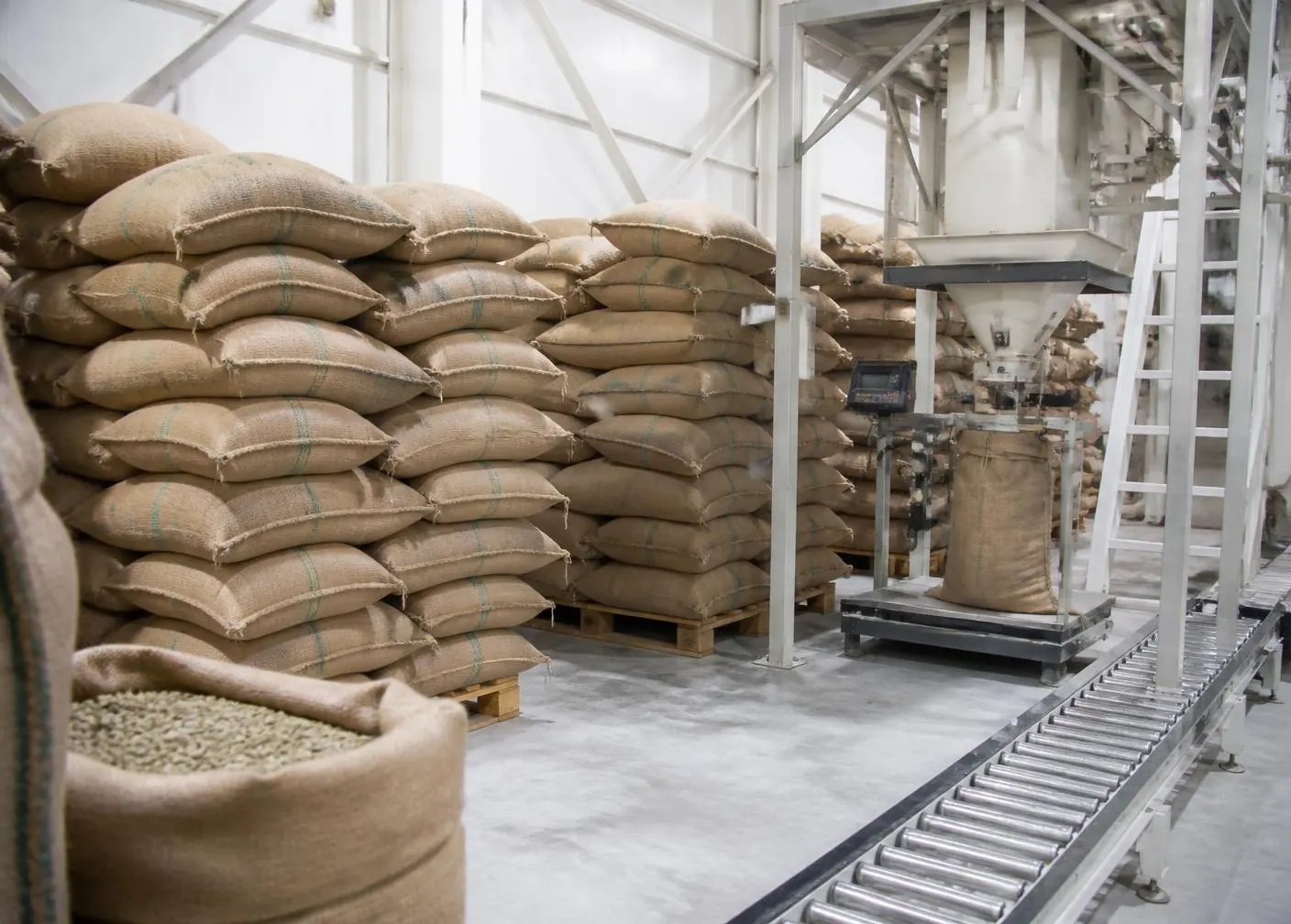
Stacked jute bags of green coffee beside a bagging scale station in a coffee dry mill warehouse

Project Leadership

Connect responsibilities, information, schedules, logistics, installation, and startup.

Discuss Your Project