
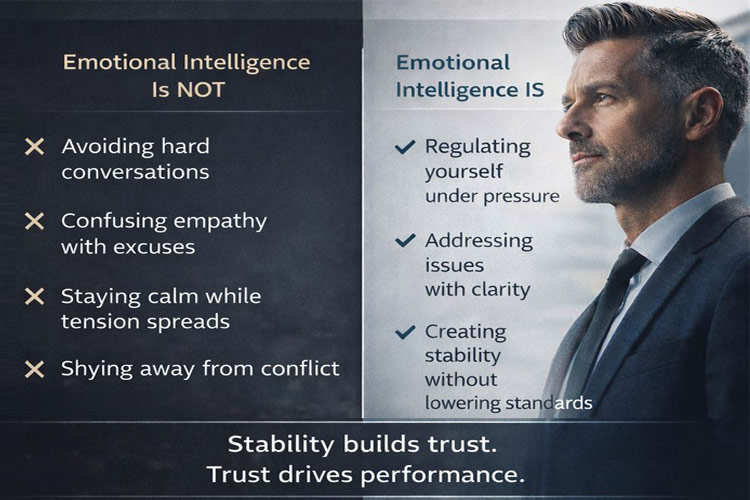
The 6 Essential Steps to Building Emotional Intelligence:
A Practical Framework for Professionals Who Want to Lead Better
Emotional intelligence is often discussed as if it were an innate trait. Something you either have or do not. In reality, emotional intelligence is a set of skills that can be intentionally developed over time. Like any other professional capability, it improves with awareness, practice, and discipline. For leaders, sales professionals, and high performers, emotional intelligence is not optional. It influences how trust is built, how conflict is resolved, and how decisions are made under pressure. The following six steps form a practical framework for developing emotional intelligence in a way that directly impacts professional success.
Step One: Build Real Self-Awareness
The first step in emotional intelligence is learning to recognize your own emotional patterns. This goes beyond knowing your strengths or weaknesses. It requires paying attention to how you react when stressed, challenged, or uncertain. Self-aware professionals notice when frustration enters their voice, when defensiveness shapes their response, or when anxiety influences their decisions. This awareness creates the ability to pause before reacting. Without it, emotional intelligence cannot develop because behavior remains automatic rather than intentional.
Step Two: Learn to Regulate Before You Respond
Emotional regulation is the ability to manage emotions without suppressing them. High emotional intelligence does not mean feeling less. It means responding more thoughtfully. When pressure rises, emotionally intelligent professionals slow down rather than speed up. They manage their tone, body language, and timing. They recognize that their emotional state affects everyone in the room. This discipline preserves credibility and keeps conversations productive, even in difficult moments.
Step Three: Strengthen Empathy Through Listening
Empathy is not agreement; It is understanding. Developing emotional intelligence requires learning to truly listen rather than preparing a response while someone else is speaking.
Professionals with strong EQ listen for context, emotion, and intent. They ask clarifying questions instead of making assumptions. This approach reduces misunderstandings and strengthens relationships because people feel seen and respected, even when opinions differ.
Step Four: Improve Emotional Communication
Emotionally intelligent communication is clear, calm, and intentional. It avoids emotional leakage, passive aggression, or unnecessary defensiveness. This step involves choosing words carefully, matching tone to message, and addressing issues directly without escalating tension. When communication is emotionally intelligent, conversations stay focused on outcomes rather than personalities.
Step Five: Navigate Conflict with Curiosity
Conflict is unavoidable in professional environments that value standards and performance. Emotional intelligence determines whether conflict becomes destructive or constructive. High EQ professionals approach conflict with curiosity rather than control. They seek to understand what is driving the disagreement and focus on resolution rather than blame. This approach protects relationships while maintaining accountability and forward momentum.
Step Six: Build Trust Through Consistent Behavior
Trust is one of the most visible outcomes of emotional intelligence. It is built through consistency, integrity, and accountability over time. Emotionally intelligent professionals follow through on commitments, acknowledge mistakes, and treat others with respect regardless of position or circumstance. These behaviors create psychological safety, which allows teams to collaborate, perform, and adapt more effectively.
Emotional Intelligence as a Professional Discipline
Emotional intelligence is not a soft skill. It is a leadership discipline that shapes decision-making, performance, and resilience. Professionals who invest in developing these six steps find that their influence increases, their relationships strengthen, and their ability to lead under pressure improves. In a world where technical skills are expected and credentials are common, emotional intelligence remains one of the most powerful differentiators for long-term professional success.