
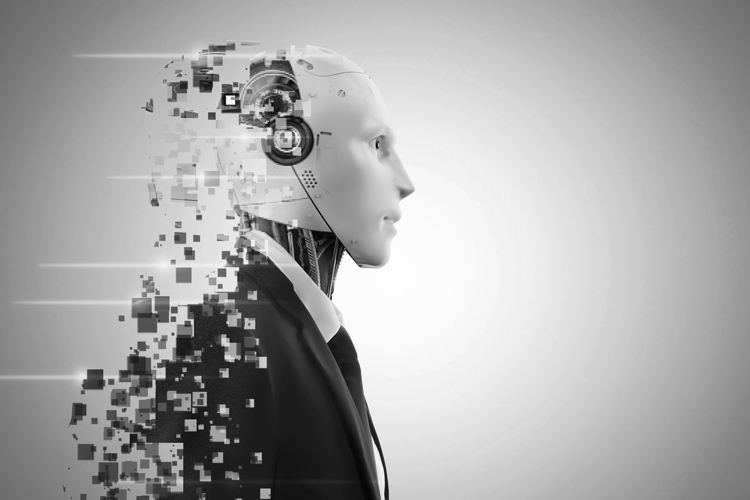
Why AI Will Never Replace You (Unless You Let It):
Every few weeks, a new headline declares that artificial intelligence is about to replace salespeople entirely. Algorithms will sell faster, bots will follow up better, and machines will close deals while humans quietly fade into irrelevance. The argument sounds compelling on the surface, especially in an era obsessed with efficiency, automation, and scale. But beneath the noise sits a more uncomfortable truth; AI isn’t replacing sales. It’s replacing the version of sales that was never particularly good to begin with.
Artificial intelligence is exceptional at handling information. It can process massive volumes of data, identify patterns humans would miss, automate follow-ups, optimize messaging, and remove friction from administrative tasks that once consumed hours of a salesperson’s day. It doesn’t forget to send emails. It doesn’t miss reminders. It doesn’t get tired, distracted, or emotionally drained. In many ways, AI is the perfect execution engine. What it is not, however, is a decision-maker in moments that actually matter.
Sales does not happen inside dashboards, scripts, or perfectly worded emails. It happens in the moments between them. It happens in the hesitation someone doesn’t verbalize, the subtle shift in tone when confidence gives way to doubt, or the pause that signals something deeper is at play. Those moments are rarely about logic or information. They are about risk, uncertainty, and the human fear of making the wrong choice and having to live with the consequences. AI can analyze conversations, but it cannot sense them, because sensing requires emotional awareness (not pattern recognition).
Trust, which remains the true currency of sales, is not built through accuracy alone. It is built through presence. People don’t open up because the answer is technically correct; they open up because they feel understood. Because they believe the person across from them recognizes what is truly at stake. AI can simulate empathy through language, but it cannot earn trust through experience. It does not carry responsibility. It does not feel the weight of outcomes. It does not wonder whether a recommendation was genuinely right for the client or merely efficient. Trust requires emotional exposure, and emotional exposure is something machines cannot offer.
There is also an element of instinct that no system can replicate. The strongest sales professionals do not simply react to inputs; they adapt based on judgment sharpened by years of wins, losses, and moments where no playbook existed. They know when to slow down instead of push, when to abandon the slide deck, when to stop talking and listen, and when to challenge a prospect because the moment demands honesty rather than approval. These decisions are not automated. They are intuitive, contextual, and deeply human.
Then there is identity. People rarely buy because a solution is impressive on paper. They buy because it feels right coming from the person presenting it. Alignment matters. Belief matters. Credibility built through lived experience matters. AI can mirror language and personalize messaging, but it does not bring character into the room. It does not stand behind its words with conviction. It does not inspire confidence by who it has become through failure, growth, and accountability. Persuasion may move interest, but inspiration is what moves people to act.
None of this means AI lacks value in sales. In fact, it is becoming indispensable. It removes friction, enhances preparation, improves consistency, and frees sales professionals to focus on higher-level thinking and deeper connection. What it cannot do is replace judgment, discernment, ownership, and trust. And those qualities remain the defining edge between someone who processes transactions and someone who leads decisions.
AI will absolutely replace salespeople whose value stops at scripts, sequences, and surface-level personalization. It will outperform anyone who relies solely on speed, automation, and access to information. But it will never replace trusted advisors, adaptive thinkers, or professionals who understand that sales is not about saying the right thing; it is about being the right person in the room.
If AI feels threatening, the question isn’t what the technology can do. The question is what you bring to the table beyond it. Because the future of sales is not human or machine. It is human and machine, working together where technology handles mechanics and people handle meaning, trust, and belief. And that future still belongs to those willing to lead it.